Custom Paper Packaging Development for Complete Projects
Develop one printed paper item, a coordinated packaging set or a multi-SKU program from a controlled structure, material, artwork, finish, assembly and packing brief.
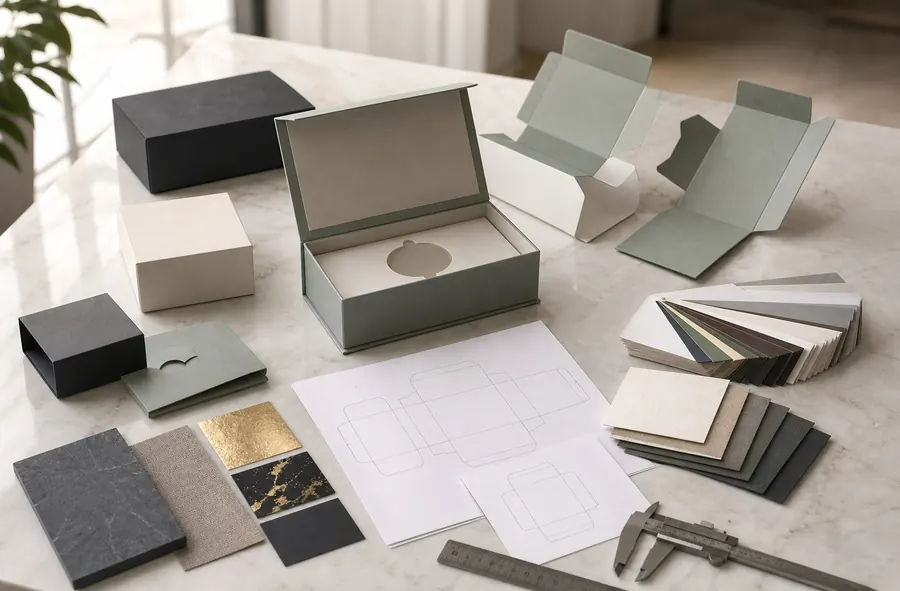
Choose the scope before selecting individual processes
Single packaging item
Begin with one rigid box, folding carton, paper bag, mailer, sleeve, card, booklet or other printed paper component.
Coordinated packaging set
Develop outer packaging, inserts, retail cartons, carry bags and printed components around one product and brand system.
Multi-SKU packaging program
Separate shared specifications from variable sizes, colors, graphics, languages and quantities across a product range.
Other printed paper project
Provide the use, dimensions, material direction, finish, quantity and supply condition for review when no standard category fits.
Connect every component to the same approved references
Product and structure
Record product dimensions, weight, orientation, fragile surfaces, opening sequence, insert and packing method before the dieline is released.
Artwork and appearance
Identify the current artwork version, visible panels, color reference, paper or wrap, print coverage and exact finish locations.
Supply condition
State flat or assembled supply, insert fitting, individual protection, units per export carton, markings and requested delivery scope.
Plan components as one functional and visual system
A rigid presentation box, product carton, insert, paper bag and printed card may use different materials and production routes. Coordination starts by defining which characteristics must match exactly and which can vary. The approved reference may include a color standard, paper swatches, finish samples, structural samples and a component list with version numbers.
Shared decisions
Brand colors, logo treatment, paper family, finish direction, opening order, product naming and visible quality standard can be controlled across components.
Component-specific decisions
Board construction, crease behavior, insert contact surfaces, bag handles, corrugated protection and export packing are specified for each item.
Assembly responsibility
Confirm whether components are supplied separately, nested, pre-assembled, fitted with inserts or packed as a completed set.
Revision control
Identify shared and SKU-specific artwork so one approved change does not accidentally alter unrelated components.
Separate the common platform from controlled variations
List every SKU, component, size, artwork language, color direction, quantity and target delivery. Then identify which dielines and materials are shared. This helps production and purchasing teams see whether a change applies to one SKU, one component or the complete range.
Master component schedule
Use one table to connect each SKU with its box, insert, carton, bag, artwork file and approved sample.
Color and finish references
Define where exact matching is required and where different substrates or processes need their own approved reference.
Quantity and packing plan
State quantities per SKU and how mixed components, spare pieces, export cartons and markings should be handled.
Move from an initial brief to production release
- Project scope
- Component list
- Product data
- Structure
- Material
- Physical samples
- Artwork approval
- Production and packing
Typical MOQ starts from 500 pieces, depending on structure, material and process. A multi-component or multi-SKU project may have different practical quantities for each item, so quantity should be stated by component and design rather than as one total.
Information that helps define a meaningful quotation
Commercial scope
Company, destination, required components, quantities per item or SKU, target timing and requested delivery scope.
Product information
Dimensions, weight, orientation, photos or samples, fragile areas, product-contact requirements and loading sequence.
Creative and technical files
Reference images, current artwork, dielines, brand color references, material samples and finish positions where available.
Unknown details can be marked for development. The quotation should distinguish confirmed requirements from assumptions and items that still require a sample or written decision.
Continue with the product, capability or buyer guide you need
Rigid Boxes
Review presentation structures, wraps and fitted insert directions.
Folding Cartons
Compare carton structures, board and print-ready requirements.
Paper Bags
Specify dimensions, gussets, handles and reinforcement.
Corrugated Mailers
Plan protection, closure and the packed-product arrangement.
Design & Prototyping
Review structure development, dielines and physical samples.
Printing & Finishing
Coordinate print, foil, embossing, lamination and other finishes.
Quality Control
Understand checks from material approval through final packing.
Compare Packaging Quotes
Use a like-for-like checklist for scope, quantity and delivery.
Rigid Box Styles & Inserts
Prepare product and insert requirements before sampling.
Paper Bag Size & Handle Guide
Label dimensions and handle details clearly for review.
Define the full packaging scope before requesting a quotation
Send the product, component list, quantities, SKU count, artwork status, finish direction, supply condition and destination. HCH Packaging will identify the information needed for a controlled quotation and sample route.