A custom paper bag should be specified around the items it will actually carry. Begin with the packed product, then define width, height and gusset in a labelled drawing. Paper, top reinforcement, handle material, handle attachment and expected packed weight should be reviewed together. This guide provides a practical RFQ and sample-approval method without relying on ambiguous “standard sizes.”
State the Measurement Order Clearly
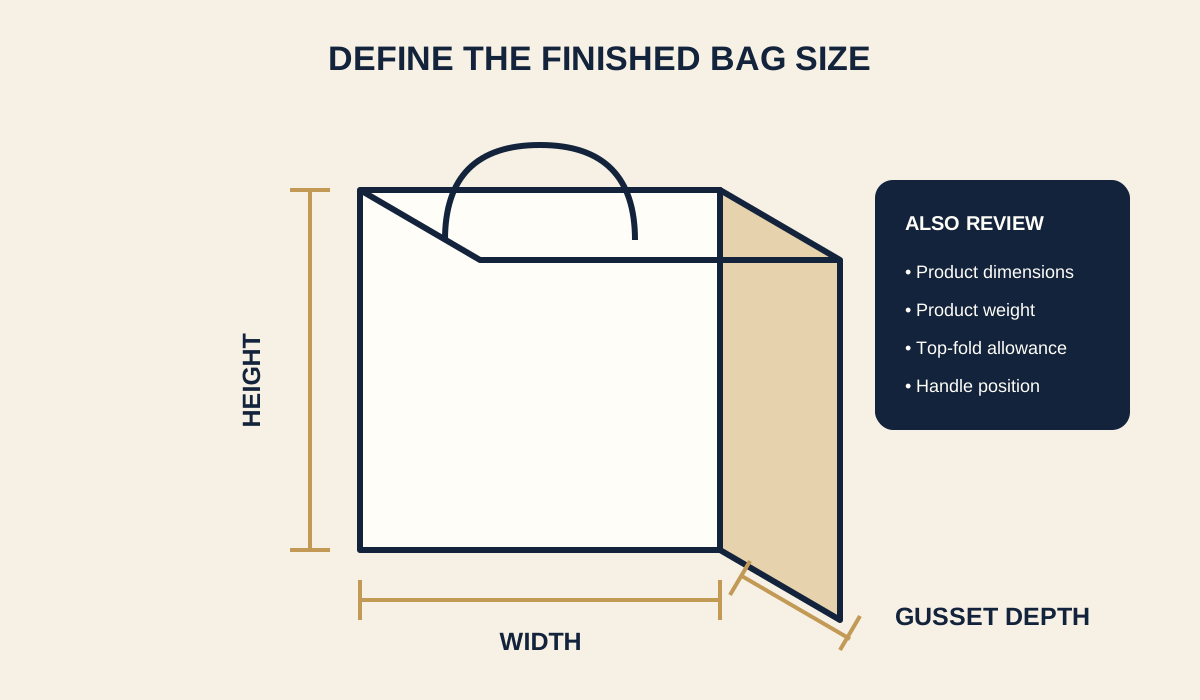
This guide uses Width × Height × Gusset. Width runs across the front panel, height runs from the bottom fold to the top edge, and gusset describes the side depth when opened. Other suppliers may list these dimensions in a different order, so do not send three numbers without a diagram.
Clarify whether the dimensions are finished external dimensions, usable internal space or dieline measurements. They are not interchangeable. Paper thickness, folds, top turn-over, bottom construction and practical loading clearance reduce usable space. Measure the complete packed item, including any rigid box, tissue, card, protective wrap or accessory that will enter the bag.
A product measuring close to the nominal bag width or height may still be difficult to load because the gusset and bottom need to open. A physical sample is the most reliable way to confirm loading and presentation.
How the Gusset Changes Usable Depth
The side gusset folds inward when the bag is flat and opens to create depth. The bottom construction opens with it, so usable volume depends on more than the gusset number. Product corners, orientation and the sequence used to load a boxed item can affect fit.
For a deep rectangular product, review whether the front-panel width and gusset allow it to pass through the opening without forcing the paper. For several items, consider how they sit at the bottom and whether they can shift. Do not rely on a simple volume formula to approve the final size; use a labelled structural drawing and a physical sample with the intended contents.
Choose Portrait, Landscape or Near-Square Proportions
A portrait bag can suit taller products and compact retail packs. A landscape bag can support wider presentation boxes, while a near-square proportion may suit multi-item gifts. The visual proportion should follow the packed item and handle position rather than a generic catalogue example.
Also review how the bag will be packed into export cartons. Very wide or deep bags can affect folding, carton utilization and the risk of creasing in transit. If a matching rigid box or folding carton is part of the program, share its finished sample or approved dimensions before the bag dieline is finalized.
Handle Material Options
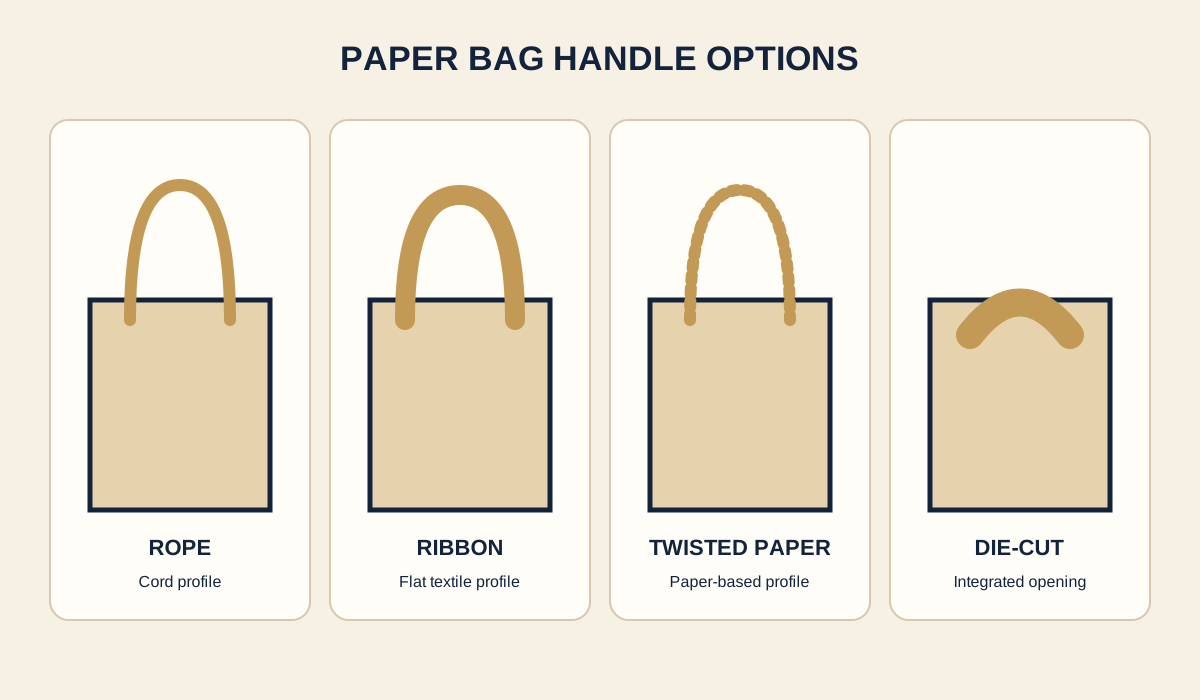
Three-strand cord
Cord creates a rounded hand-feel and can be supplied in different fibers, colors and diameters. The approved material, length, knot or end treatment and hole construction should be identified in the specification.
Flat woven ribbon or tape
Flat handles provide a broader branded surface and a different carry feel. Width, weave, color, edge finish and attachment method should be sampled with the bag.
Cotton or low-stretch cord
Fiber content and stretch behavior can vary. The exact supplied sample should be approved instead of relying only on a generic name.
Twill tape
Twill tape offers a visible diagonal weave. Its width, thickness, color and cut-end treatment may affect appearance and assembly.
Paper rope
Twisted or flat paper handle directions may be considered where they suit the visual and carrying brief. Any sustainability statement requires evidence about material sourcing and the complete package; the word “paper” alone is not proof of environmental performance.
Handle Attachment Options
Punched and threaded handles pass through holes and are retained on the inside. Hole position, reinforcement and the internal finish need review. Reinforced or eyelet-supported holes may be considered where the approved construction calls for hardware or additional support; confirm the exact component name, material and appearance with production. Concealed attachments can hide ribbon or handle ends inside the top fold, but add internal assembly details that must be sampled.
No attachment should be selected from appearance alone. The expected packed weight, bag dimensions, paper, top reinforcement and handle direction form one system. Any load or performance statement should identify the test setup and result.
Match Paper, Handle and Reinforcement to the Packed Weight
Coated paper, white or natural paper directions and specialty papers can behave differently during printing, creasing, folding and handling. Basis weight is useful, but surface, stiffness, fold performance and the approved visual sample also matter. A material sometimes described loosely as “white kraft” should be identified by the actual supplied paper rather than translated as a universal grade.
Matte, gloss, scratch-resistant and tactile films may be considered after the paper and artwork are known. Avoid treating “scratch-resistant” as scratch-proof or describing a laminated paper bag as waterproof. Performance depends on material, construction and conditions of use.
Top reinforcement can distribute the force around handle attachments. Its width, material and adhesive area are project-specific. A bag for a lightweight textile is not automatically suitable for a boxed product of the same external size.
A Quote-Ready Paper Bag Specification
| Specification field | What to provide | Why it matters |
|---|---|---|
| Packed product | Maximum W × H × D, total weight, orientation and photos | Controls usable space and carry requirement |
| Bag dimensions | Labelled W × H × G drawing; state external or internal basis | Prevents dimension-order errors |
| Paper | Type, basis weight or approved swatch, color and texture | Affects print, folds, stiffness and appearance |
| Handle | Material, width or diameter, color, length and attachment | Affects carrying and brand presentation |
| Reinforcement | Top fold and support direction | Works with the handle and packed weight |
| Printing | CMYK/Pantone direction, artwork and approval method | Defines color and coverage |
| Finishes | Location and area of foil, embossing, UV or lamination | Defines process and tooling |
| Quantity | Two or three realistic order breaks | Allows comparable pricing |
| Packing | Flat arrangement, individual protection and units per carton | Affects export packing and handling |
| Delivery | Destination, timing and requested Incoterm | Defines the commercial scope |
See our custom paper bag capabilities for the commercial project scope, and review printing and finishing after material and artwork direction are known.
Approve a Physical Bag Sample
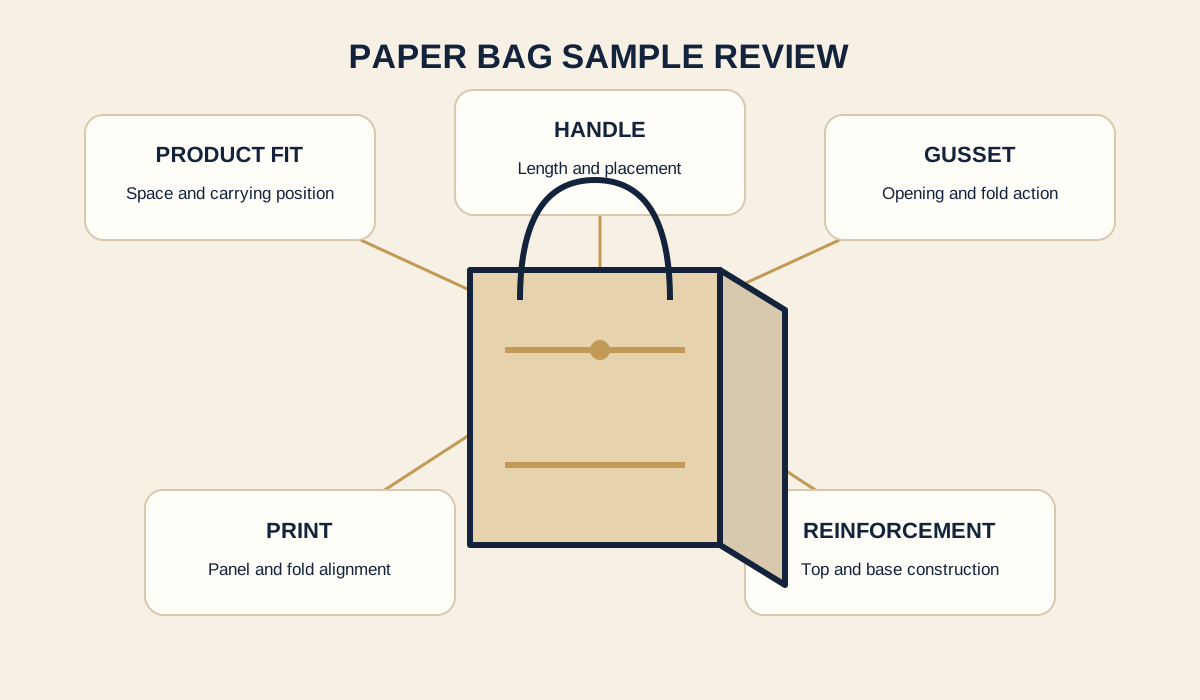
- Load the intended product, including its box and protective materials.
- Check practical insertion, clearance, bottom opening and final presentation.
- Review handle length, hand access, balance and attachment position.
- Inspect the top fold, reinforcement, holes or concealed attachment.
- Approve paper, print color, registration and finish placement.
- Check creases, gluing, visible edges and the bag when flat and opened.
- Confirm finished packing, export-carton arrangement and approved reference.
The sample confirms the reviewed configuration; it does not create an unlimited load guarantee. Record any buyer-specific performance method separately.
Frequently Asked Questions
How do I measure a paper bag?
Measure the complete packed product, then provide a labelled diagram. This guide uses Width × Height × Gusset, but the order must be stated because conventions differ.
What does gusset mean?
It is the folded side depth that opens to create space. The nominal gusset alone does not define all usable internal volume.
Which handle type should I choose?
Choose from the expected packed weight, dimensions, paper, reinforcement, carry feel, appearance and budget. Approve the actual handle material and attachment in a sample.
Is a standard size faster?
Sometimes an established construction can simplify development, but availability and timing depend on the specification, material and production schedule. Do not force the product into an unsuitable size.
What information is needed for a quote?
Provide packed dimensions and weight, bag dimensions, paper, handle and attachment direction, printing, finishes, quantities, packing, destination and artwork status.